
El Niño Summit 2026: Building Resilience to Drought, Heat and Water Security Risks
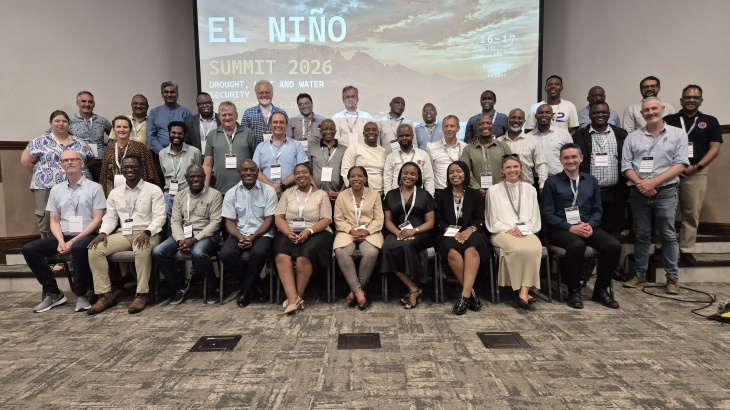
Participants in the 2026 El Niño Summit. Image: Torsten Weber, GERICS
From 16–17 November 2026, the WaRisCo (Water Risk and Resilience in Urban-Rural Areas) project organised and hosted the El Niño Summit 2026 at the Champagne Sports Resort in the Drakensberg, South Africa.
The summit focused on the ongoing El Niño event in the tropical Pacific Ocean, which is forecast to be strong to very strong this season. El Niño events are often associated with severe droughts and below-average rainfall across Southern Africa. The programme, developed by Dr. Sophie Biskop from the Friedrich Schiller University Jena, combined insights into the expected impacts of the current El Niño event with the latest findings from the WaRisCo project, stakeholder perspectives and adaptation planning activities in the project’s two case study regions: the Integrated Vaal River System and the KwaZulu-Natal River System.
The summit brought together representatives from DWS, the National Disaster Management Centre (NDMC), the Department of Cooperative Governance and Traditional Affairs (COGTA), water utilities, research institutions, development organisations and international partners. Participants explored preparedness measures for droughts, heatwaves and water shortages and identified actions to strengthen resilience across both river systems.
Dr. Torsten Weber, WaRisCo Sub-Project Principal Investigator at GERICS as part of the Helmholtz-Zentrum Hereon, presented the latest findings on projected compound climate extremes, such as concurrent droughts and heatwaves, as well as sequential droughts and extreme precipitation events, in both river systems. His contribution supported discussions on how climate services and risk information can inform long-term water management, disaster risk reduction and climate adaptation strategies.
Together with Prof François Engelbrecht, Dr Sophie Biskop, Dr Muhammad Fraz Ismail, Dr Johan Malherbe, Deborah Schaudt and Chris Moseki, he presented the latest scientific evidence to support informed decision-making and climate resilience planning.
The summit highlighted the importance of strong partnerships between science, policy and practice. By bringing together stakeholders from government, academia and the water sector, the WaRisCo project continues to support evidence-based solutions for a more resilient future in the Integrated Vaal River System and the KwaZulu-Natal River System in South Africa.